Sleeve Bearing Fans — How They Work and When to Choose Them
Most compact AC axial fans — including nearly all of ours — run on sleeve (bogus/bushing) bearings. Here is what that means for price, life and orientation, in plain terms, because it is the first question a careful buyer asks.
Inside a sleeve bearing fan motor
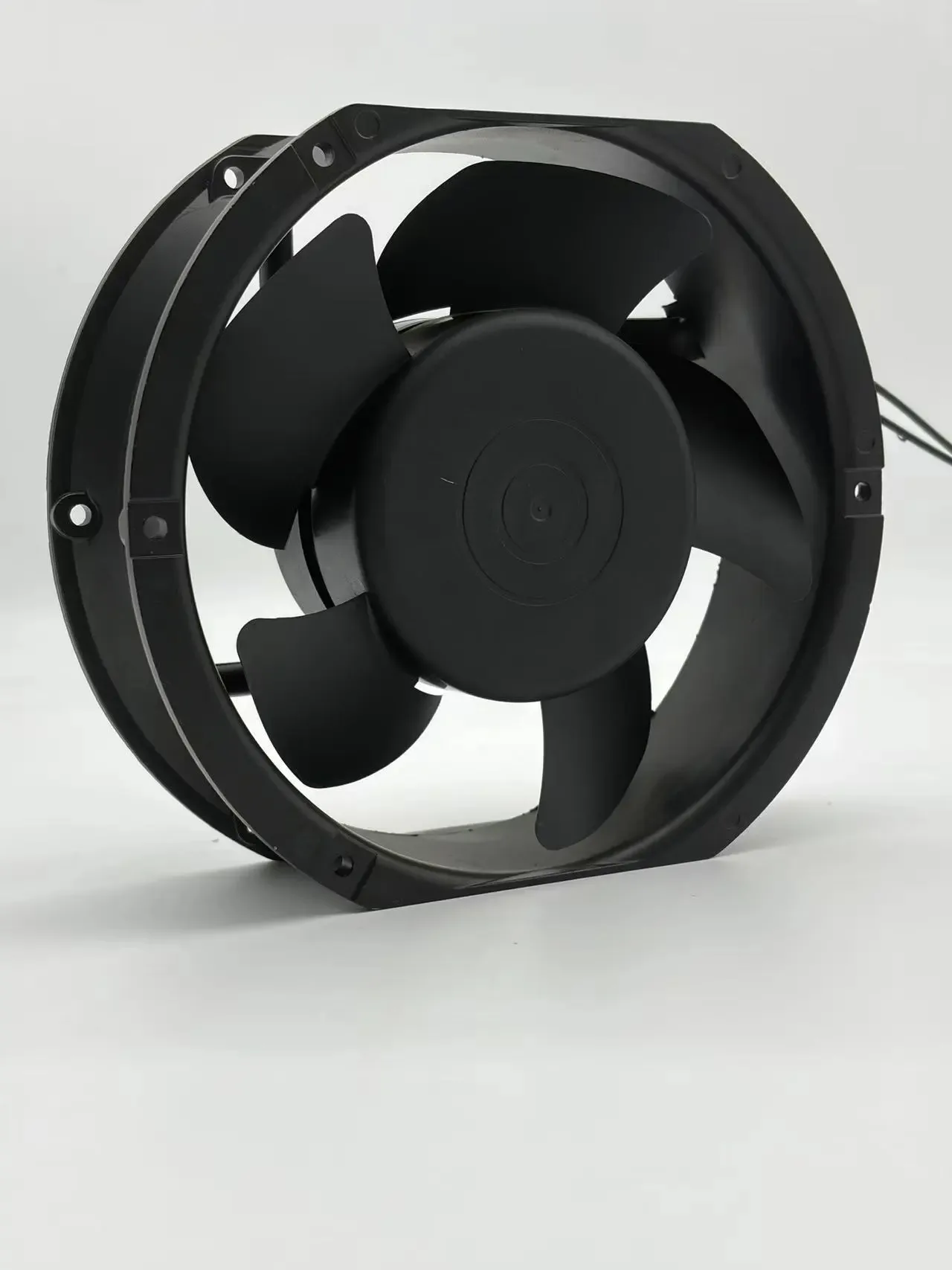
The shaft spins inside a sintered oil-impregnated bushing. Oil wicked through the porous metal film separates the surfaces — there is no rolling element. Fewer parts, no precision ball tracks: this is why a sleeve bearing fan is the cheapest AC axial fan to build and the quietest when new.
Why buyers choose sleeve
- Lowest unit cost at equal size and airflow.
- Lower running noise when new — no ball whine.
- Simple, proven motor construction for panel duty.
Where sleeve has limits
- Life is oil-dependent: hot chambers age the oil faster. Ratings assume continuous duty at moderate temperature.
- Vertical-shaft (axle up/down) mounting shortens life unless the build is specified for it — ask us.
- Very high ambient or 24/7 hot-spot duty may justify a ball-bearing option — we quote it per model.
Choosing between the two
The honest rule of thumb: enclosed side-mounted panel fan, ambient under about 40 °C — sleeve is the value choice and what we ship as standard. Continuous hot compartments, high-vibration mountings or vertical motors — specify ball bearings and we will confirm the model can be built with them.
Fan motor bearings are field-serviceable in larger frames but potted/sealed in compact fans — for our 80–220 mm range, replacement rather than re-bearing is the economic path, and one-year warranty plus 100-piece MOQ makes spares cheap to keep on the shelf.
Continue
Ask us for the bearing option on your model.
Send the requirements — the reply carries models, specs and a quotation.